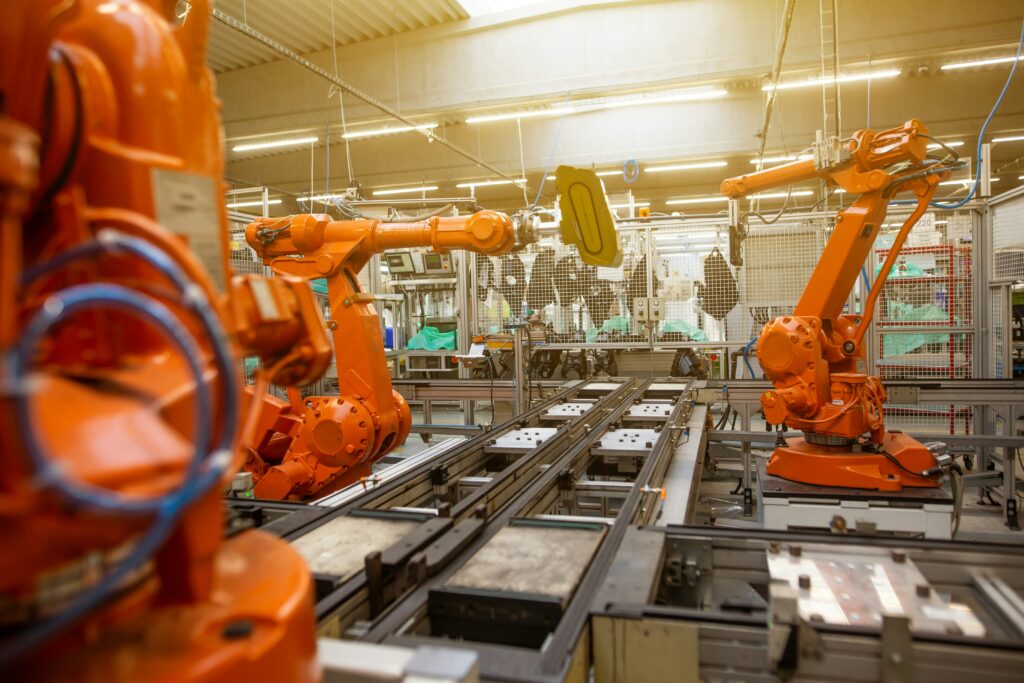
Robotic assembly has fundamentally changed how products are made, becoming a critical part of modern manufacturing lines.
By automating complex, repetitive, or dangerous tasks, robotics have improved productivity, precision, and workplace safety.
FOLLOW US ON FACEBOOK
Key Benefits of Robotic Assembly
1. Higher Efficiency and Productivity
- Non-stop Operation: Robots can operate continuously without needing rest, holidays, or shifts, resulting in faster production timelines.
- Rapid Task Execution: Tasks that usually take humans longer can be performed much faster by robots, slashing overall production cycles.
2. Superior Precision and Accuracy
- Consistent Output: Robots follow exact programming instructions, ensuring each product is made to the same high standard.
- Handling Fine Details: Some robots can perform extremely delicate tasks, making them ideal for assembling intricate parts like microchips or medical devices.
3. Cost Advantages
- Labor Savings: Automation reduces dependency on large human workforces, leading to savings in salaries, training, and benefits.
- Material Optimization: Robots can minimize waste through precise operations, cutting material costs significantly.
4. Enhanced Workplace Safety
- Risk Mitigation: Robots can take over dangerous jobs, such as handling heavy loads, hazardous chemicals, or working in extreme environments.
- Reducing Worker Injuries: Automating repetitive and strenuous tasks helps lower the risk of injuries and musculoskeletal disorders among human employees.
5. Flexibility and Growth Potential
- Easy Adaptation: Robotic systems can be reprogrammed to assemble new products, allowing factories to quickly adapt to changing demands.
- Scalability: Companies can scale operations up or down by adjusting the number of active robots without major disruptions.
Where Robotic Assembly is Used
Automotive Manufacturing
- Welding Tasks: Robots perform precise welding for car frames and components.
- Component Assembly: Engines, transmissions, and even interior dashboards are now often assembled with robotic assistance.
Electronics Industry
- PCB Assembly: Robots place electronic components onto circuit boards with extreme accuracy.
- Gadget Assembly: Smartphones, laptops, and tablets rely on robotic systems for their delicate internal assembly.
Medical Device Production
- Precision Work: Robotic arms assemble tiny, intricate medical devices and implants.
- Maintaining Sterility: Robots help manufacture devices in ultra-clean environments to avoid contamination.
Food and Beverage Sector
- Automated Packaging: Robots fill, seal, and palletize products to ensure consistent, hygienic handling.
- Quality Inspection: Visual systems in robots detect product defects and maintain consistent standards.
Robotic Assembly Systems & It’s Types
- Structure of Articulated Robots Types: These resemble a human arm with multiple rotating joints & angles.
Applications: Common in welding, material handling, and heavy-duty assembly work in mostly sheet metal & machinery manufacturing factories.
- Structure of SCARA Robots (Selective Compliance Articulated Robot Arm) Types: Features a rigid vertical axis and flexible horizontal movement.
Applications: Ideal for precise assembly and pick-and-place operations.
- Structure of Delta Robots Types: Lightweight, spider-like design allowing ultra-fast movement in fast mode.
Applications: Mostly used for quick picking and packaging tasks in food and pharmaceutical industries & also many other multitasking work.
- Structure of Collaborative Robots (Cobots): Designed to work safely alongside humans, often with built-in sensors to prevent accidents such as mostly robots used in industry & as well as some other feasible.
Applications: Helpful in shared tasks such as inspections, lightweight assembly, quality control and many more.
Future of Robotic Assembly
- Artificial Intelligence Integration: Smarter robots capable of learning from data and improving their own performance.
- IoT Connectivity: Robots interconnected with other machines for real-time updates and coordination.
- Advanced Vision Systems: Enhanced cameras and sensors will allow robots to make more complex decisions on the spot.
- Greater Human-Robot Collaboration: Cobots will take on more tasks requiring both human flexibility and robotic strength.
Conclusion
Robotic assembly is revolutionizing manufacturing by making it faster, safer, and more precise. As new technologies like AI, IoT, and advanced sensors emerge, the capabilities of robotic assembly will only continue to expand, paving the way for even more efficient and intelligent factories.
FAQs for Robotic Assembly
- What does robotic assembly mean in manufacturing?
Answer:
Robotic assembly involves using programmed machines to automatically put together components in manufacturing processes. These robots help achieve higher accuracy, faster production, and improved workplace safety compared to traditional manual assembly. - How does robotic assembly boost production efficiency?
Answer:
By operating nonstop and performing repetitive tasks faster than humans, robotic assembly systems significantly reduce production times, minimize errors, and maintain consistent product quality, leading to greater overall efficiency.
- What challenges are associated with implementing robotic assembly?
Answer:
Some challenges include high initial investment costs, the need for technical expertise to manage and maintain robots, integration complexity with existing systems, and ensuring cybersecurity for connected robotic networks. - How does AI enhance robotic assembly systems?
Answer:
AI enhances robotic assembly by enabling robots to learn from data, adapt to new tasks, detect defects automatically, and optimize assembly processes in real-time without human intervention.
How automation playing important role in manufacturing?
What is the role of Engineering in simple words ?
The Revolutionary Role of Robotic Assembly in Modern Manufacturing